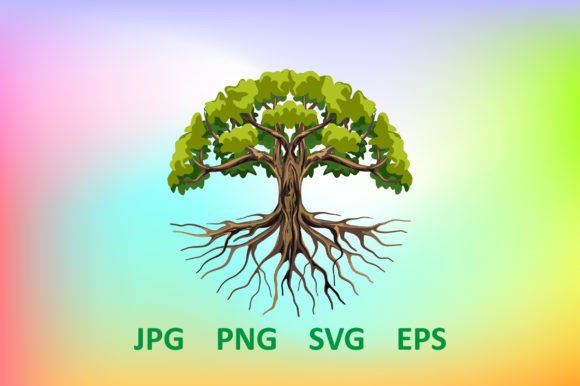
Evaluating the Oak Tree Logo Design in Circular Shape for Brand Identity
In the realm of visual branding, few symbols convey stability, growth, and heritage as effectively as the oak tree. When this powerful natural motif is encapsulated within a circular frame, it creates a balanced and cohesive aesthetic known as an Oak Tree Logo Design in Circular Shape. This specific design configuration is not merely decorative; it serves as a strategic tool for businesses and creators seeking to project reliability and timelessness. Understanding the nuances of this design format, its technical specifications, and its practical applications is essential for anyone looking to integrate it into their visual identity or creative projects.
Understanding the Design Concept
An oak tree logo typically features the distinct silhouette of an oak, often highlighting its sprawling branches and acorn details. By placing this imagery within a circle, designers leverage the psychological impact of geometric shapes. Circles represent unity, community, and eternity, while the oak represents strength and endurance. The combination results in a badge-style emblem that feels established and professional. This design approach is particularly effective because it contains complex organic lines within a structured boundary, making the logo easier to recognize and reproduce across various media.
For those evaluating digital assets, it is crucial to distinguish between static images and vector templates. A high-quality Oak Tree Logo Design in Circular Shape is usually provided as a vector template. Unlike raster images, which are made of pixels, vector graphics use mathematical paths. This means the design can be scaled from the size of a business card to a billboard without any loss of clarity or resolution. This scalability is the primary reason professionals prefer vector-based assets for foundational brand elements.
Technical Specifications and File Formats
When acquiring design assets, the included file formats determine how versatile the resource will be. A comprehensive package for an oak tree logo should ideally include multiple file types to cover different use cases. Understanding these formats helps in making an informed decision about whether a particular download meets your technical requirements.
- EPS10 Files: Encapsulated PostScript files are industry-standard vector formats. They are compatible with most professional design software, such as Adobe Illustrator and CorelDRAW. These files are fully editable, allowing designers to change colors, adjust line weights, or modify the tree’s structure.
- SVG Files: Scalable Vector Graphics are ideal for web development. They maintain crispness on high-resolution screens and have smaller file sizes compared to raster images, contributing to faster website loading times.
- PNG Files: Portable Network Graphics offer lossless compression and support transparency. This is vital for overlaying the logo on colored backgrounds or photographs without an unsightly white box appearing around the circular edge.
- JPG Files: Joint Photographic Experts Group files are universal raster images. While they do not support transparency and are not scalable, they are useful for quick previews, social media posts, or documents where editing is not required.
Having access to all four formats ensures that the Oak Tree Logo Design in Circular Shape is ready to print or use with any design, web page, or blog immediately after purchase. This versatility reduces the need for additional conversion tools or hiring a graphic designer for basic adjustments.
Strategic Benefits and Applications
There are several reasons why individuals and organizations might choose this specific design style. First, the circular badge format is highly adaptable for merchandise. It fits naturally on round stickers, bottle caps, coasters, and emblems on apparel. For DIY crafts and small business owners, having a pre-designed, high-quality vector template saves significant time and resources. Instead of commissioning a custom logo from scratch, users can utilize these assets as a foundation, customizing them to fit their specific brand colors or typography.
Furthermore, this design is suitable for a variety of industries. Environmental organizations, landscaping companies, woodworking shops, and educational institutions often find that the oak tree resonates with their core values. The circular enclosure adds a sense of completeness and trustworthiness, which is beneficial for customer-facing brands. Additionally, these elements can be used as secondary graphics in larger illustrations, animations, or t-shirt designs, providing consistency across marketing materials.
Considerations and Tradeoffs
While the benefits are clear, there are tradeoffs to consider when using stock or template-based designs. The primary concern is uniqueness. Since these files are available for purchase by multiple users, there is a possibility that another entity may use a similar design. To mitigate this, it is advisable to customize the template significantly. Changing the color palette, adding unique text, or modifying the tree’s silhouette can help differentiate your brand while still leveraging the high-quality base structure.
Another consideration is the level of editing skill required. While JPG and PNG files are ready to use out of the box, utilizing EPS and SVG files effectively requires familiarity with vector editing software. Users who lack these skills may find themselves limited to the default appearance of the logo. However, for those willing to learn or who have access to a designer, the editability of vector files offers immense creative freedom.
When to Choose This Design
This design is a strong fit for startups and small businesses operating on a limited budget who need professional-grade visuals quickly. It is also ideal for non-profits and community groups that want to convey stability and growth without the expense of a bespoke branding agency. If your project involves printing on various materials, from paper to fabric, the vector nature of the Oak Tree Logo Design in Circular Shape ensures consistent quality regardless of the output method.
Additionally, if you are creating a suite of branded materials—such as business cards, letterheads, and website icons—having a scalable vector master file simplifies the workflow. You can generate all necessary sizes and formats from a single source file, ensuring visual consistency across all touchpoints.
When to Consider Alternatives
Conversely, if absolute exclusivity is a legal or brand requirement, a stock template may not be sufficient. In such cases, commissioning a custom logo design from a professional illustrator is the better path. Similarly, if your brand identity relies on highly abstract or minimalist concepts that do not align with the traditional symbolism of an oak tree, exploring other motifs or geometric styles might be more appropriate.
Moreover, if you do not have access to vector editing software and do not plan to acquire it, the benefits of EPS and SVG files may go unused. In this scenario, ensuring that the provided PNG files are high-resolution enough for your specific print needs is critical. Always check the pixel dimensions of raster files before committing to large-format printing.
Making the Right Decision
Ultimately, selecting an Oak Tree Logo Design in Circular Shape comes down to balancing cost, convenience, and customization needs. Evaluate your technical capabilities and your brand’s long-term goals. If you need a versatile, high-quality asset that can be adapted for both digital and physical applications, this type of vector template offers excellent value. By understanding the file formats and potential for customization, you can make an informed choice that supports your creative vision and professional presentation.